
In Memoriam: Glenn Lehrer (1953–2024)
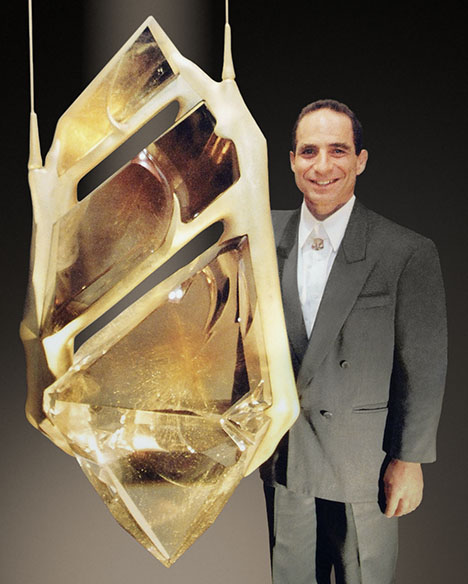
The gemological community mourns the loss of the legendary gemstone cutter and carver, Glenn Lehrer.
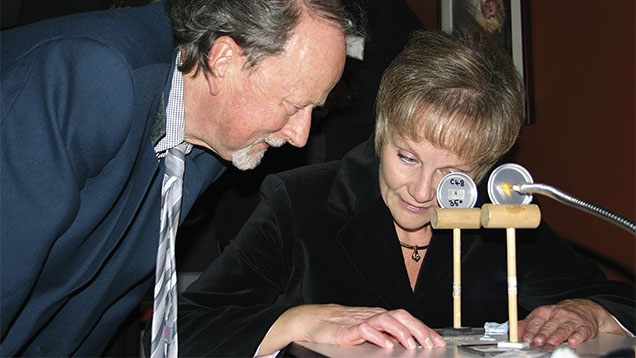
In Memoriam: Alan Hodgkinson (1937–2024)
The life of renowned Scottish gemologist Alan Hodgkinson is remembered.
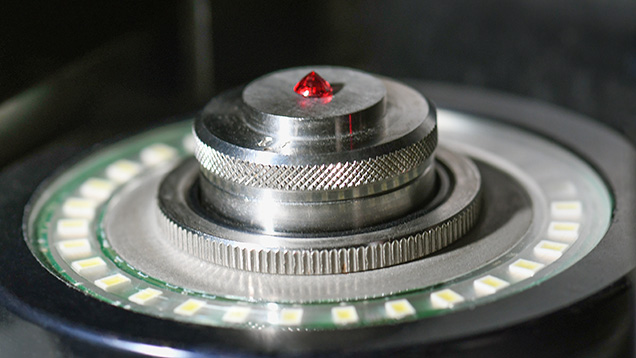
Analysis of Gemstones at GIA Laboratories
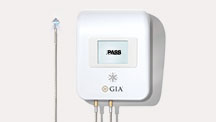
GIA’s laboratories use advanced instrumentation and research to deliver accurate grading, identification, and origin determination for natural and laboratory-grown diamonds, colored stones, and pearls.
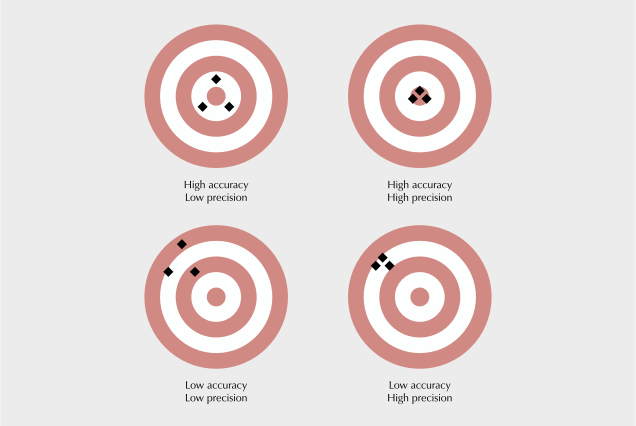
Metrology at GIA
GIA ensures accurate gemological measurements across its global laboratories through rigorous metrology practices, including systematic instrument calibration, validation from traceable standards, and continuous monitoring by trained staff to maintain precision and consistency.
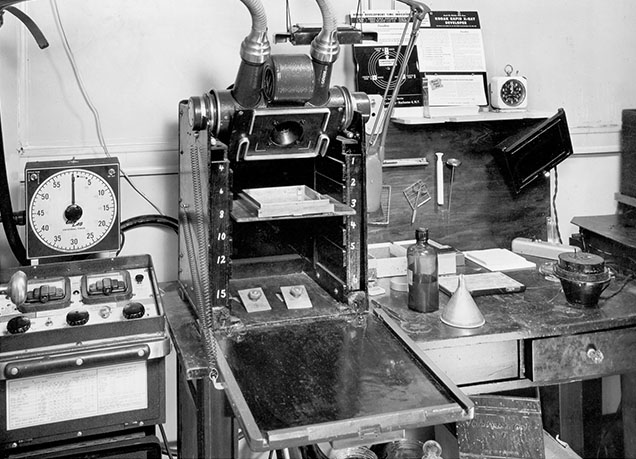
Applications of X-Ray Radiography and X-Ray Computed Microtomography in Gemology
X-ray imaging techniques revolutionized pearl testing by enabling gemologists to distinguish natural from cultured pearls through detailed visualization of their internal structures, evolving from film-based systems in the early 1900s to today’s sophisticated digital equipment.
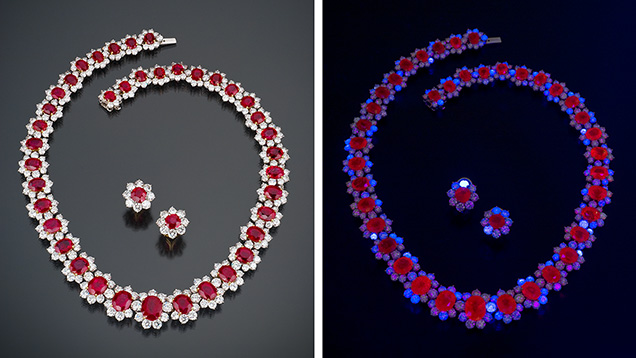
Glowing Gems: Fluorescence and Phosphorescence of Diamonds, Colored Stones, and Pearls
Photoluminescence imaging, which analyzes how gemstones glow under ultraviolet light, is an important analytical tool for detecting impurities, natural versus synthetic gems, and treatments through the observation of fluorescence and phosphorescence patterns.
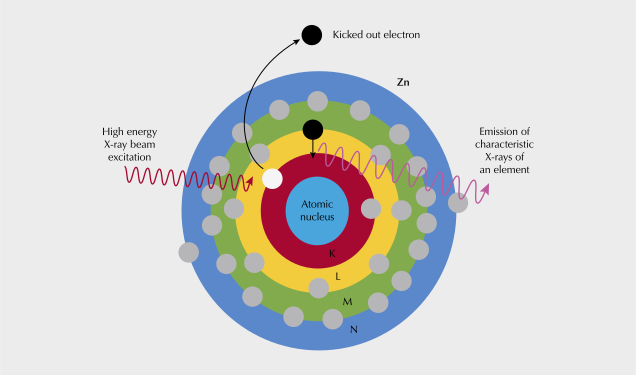
Chemical Analysis in the Gemological Laboratory: XRF and LA-ICP-MS
The primary chemical analysis methods applied in gemology are XRF, which uses X-ray emissions for nondestructive testing, and LA-ICP-MS, which provides detailed analysis and greater sensitivity. LA-ICP-MS has become essential for origin determination and treatment detection.
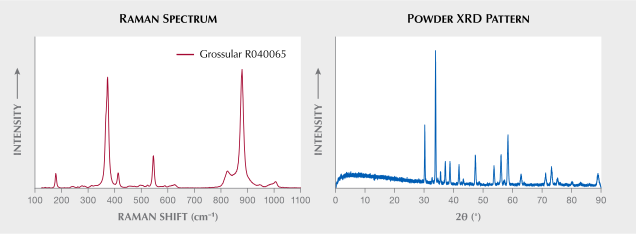
Raman Spectroscopy and X-Ray Diffraction: Phase Identification of Gem Minerals and Other Species
Raman spectroscopy and XRD techniques are used to identify gemstone species through their atomic-scale structures, with Raman spectroscopy analyzing inelastic light scattering from crystal lattice vibrations and XRD examining X-ray interference patterns from atomic layers.
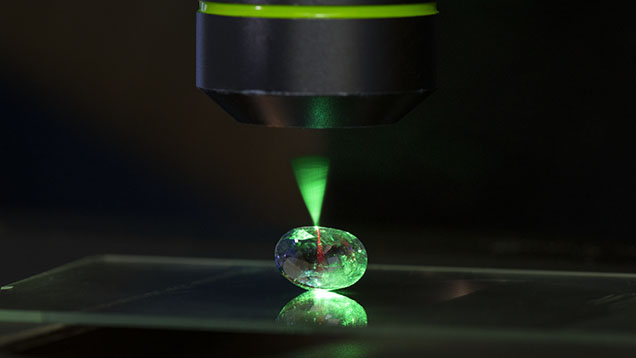
Shining a Light on Gemstone Properties: An Exploration of Photoluminescence Spectroscopy
Photoluminescence spectroscopy examines how gemstones absorb and emit light, uncovering crucial details about their identity and color origin through the detection of microscopic defects and impurities.
Infrared Spectroscopy and Its Use in Gemology
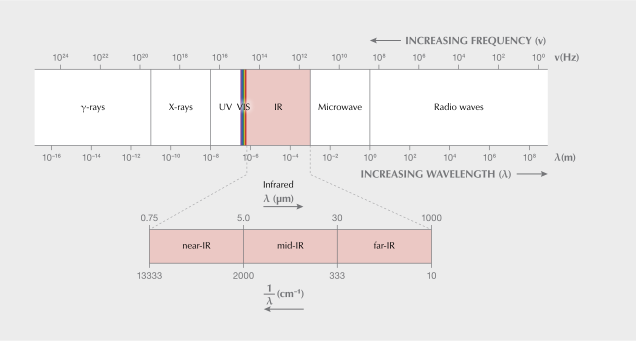
Infrared spectroscopy, specifically FTIR analysis, measures atomic vibrations to determine identity, cause of color, and potential treatments by analyzing how a gemstone absorbs infrared light.
Application of UV-Vis-NIR Spectroscopy to Gemology
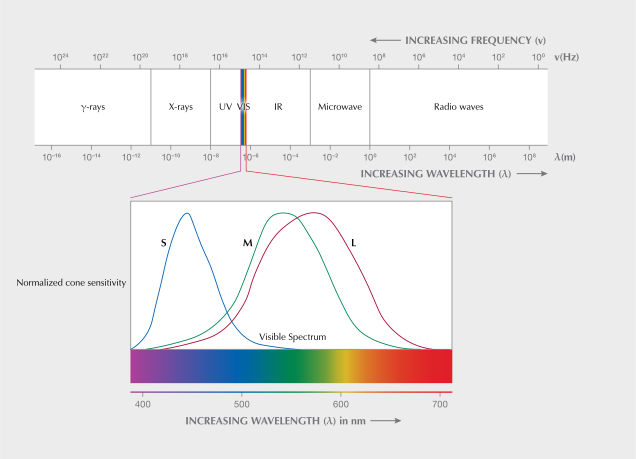
UV-Vis-NIR spectroscopy measures how gemstones absorb and interact with light across the ultraviolet, visible, and near-infrared ranges, revealing crucial information about their composition, origin, and potential treatments.
Analytical Techniques in Gemology: A Historical Overview
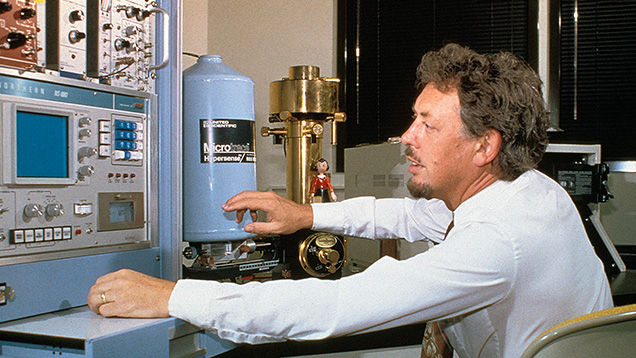
Gemology has become a highly technical field employing analytical instruments for gem testing, driven by the need to address increasingly complex identification challenges in the marketplace.
Winter 2024 G&G Publication Information
This document provides the publication information for Gems & Gemology
.jpg "YMAL GIA Ed")