
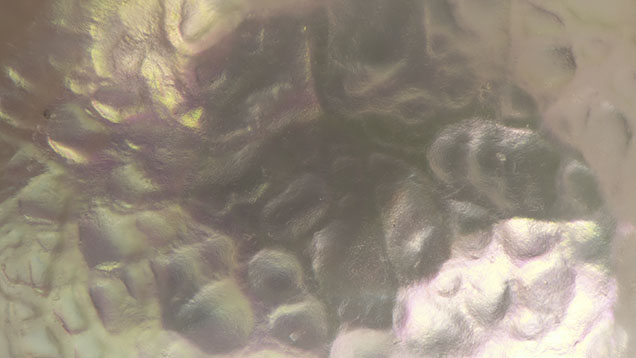
Pearls formed in an organic environment often show unique external and internal features. In a recently examined multistrand necklace composed of small natural pearls ranging from 3.45 × 2.49 mm to 6.51 × 6.30 mm, some pearls displayed an interesting surface pattern. Unlike typical hammering effects, which produce a series of flat facets or shallow indentations (Summer 2025 Gem News International, pp. 210—212), these pearls featured a reticulated pattern with deeper indentations and distinct ridges (see above). This unique surface texture is a result of natural pearl growth; no post-harvest treatment or alterations were detected.
Emiko Yazawa is a senior analytics technician at GIA in New York.
Pearls formed in an organic environment often show unique external and internal features. In a recently examined multistrand necklace composed of small natural pearls ranging from 3.45 × 2.49 mm to 6.51 × 6.30 mm, some pearls displayed an interesting surface pattern. Unlike typical hammering effects, which produce a series of flat facets or shallow indentations (Summer 2025 Gem News International, pp. 210—212), these pearls featured a reticulated pattern with deeper indentations and distinct ridges (see above). This unique surface texture is a result of natural pearl growth; no post-harvest treatment or alterations were detected.
Emiko Yazawa is a senior analytics technician at GIA in New York.