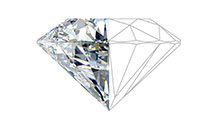


Superdeep diamonds include some of the largest, highest-clarity and most legendary diamonds in the world, including the Cullinan and the Lesotho Legend. They are not only dazzlingly beautiful but also of great scientific interest.
Regular diamonds formed at 150–200 km in the lithospheric mantle (at the base of ancient thick regions of continents) at a much greater depth than any other kind of gemstone. Superdeep diamonds, however, formed at an even greater depth—300–800 km in the sublithospheric mantle, right below the rigid lithospheric plates that make up the earth’s surface. These diamonds are important because they provide the only well-preserved samples of the sublithospheric mantle, offering insight into subduction processes and the composition, dynamics, and evolution of the earth’s interior, all of which help us understand the geological evolution of our planet. Making up only 1–2% of all mined diamonds, they are also ultrarare and beautiful and have distinctive properties.
It has long been a mystery how superdeep diamonds were transported to the earth’s surface, since kimberlite pipes—the rare volcanic pipes that bring diamonds up to the surface—are shallower than superdeep diamonds. With new research, the journey of these diamonds is coming into clearer view.
Historically, it has been difficult to study these diamonds due to their rarity and high value. But GIA scientists have had the unique privilege of studying thousands of these high-quality gem diamonds. Through careful research, GIA scientist Dr. Evan M. Smith has uncovered their geologic journey and origin. In this article, we will cover the journey of superdeep diamonds and what this means for the gem trade.

The Centenary diamond was found on July 17, 1986 at the Premier mine in South Africa. Cut from a 599 ct rough into a 273.85 ct gem, it is one of the largest top-color diamonds ever found. The same mine also produced the Cullinan in 1905, the Niarchos in 1954, the Taylor-Burton in 1966, and the Premier Rose in 1978. Photo by Patrick Landmann/Getty Images.
Characteristics of Superdeep Diamonds
Many superdeep diamonds are type IIa (the most chemically pure type of diamond) and/or CLIPPIR diamonds. CLIPPIR stands for Cullinan-like, Large, Inclusion-Poor, Pure, Irregular, and Resorbed. This means many superdeep diamonds are large, have very few inclusions, are chemically pure, irregularly shaped, and were melted and then reformed. Superdeep diamonds are not typically octahedral or macle crystals. Rather, they are often broken fragments of once larger diamonds.

The Mystery of Kimberlite
Kimberlite, a type of igneous rock that’s forced to the earth’s surface by volcanic action, forms from convective instabilities or eddy currents associated with continental rifting. This means it likely forms just below the continental lithosphere, no greater than 300 km deep, at a much shallower depth than superdeep diamonds. An intermediate transport mechanism therefore must have brought them up to the base of the lithosphere to be carried by kimberlites alongside shallower lithospheric diamonds.
Smith studied diamonds from the Juína area of Brazil and two diamonds from Kankan, Guinea, localities well known for having superdeep diamonds. From observing calcium silicate and iron sulfide inclusions, he estimated the diamonds to be approximately 450–650 million years old. Their host kimberlite eruptions occurred during the Cretaceous period (145–66 million years ago). This means the diamonds must have spent more than 300 million years in storage somewhere in the mantle.

A 300-Million-Year Resting Period
Smith proposes that superdeep diamonds formed with the subduction of oceanic plates. As the oceanic plate warmed, portions of rock decreased in density and served as buoyant rafts for superdeep diamonds, carrying them upward. These rocks then adhered to the base of the continental lithosphere, where they resided for about 300 million years. Continental rifting at the start of the Cretaceous divided the Amazonian and West African cratons and their attached superdeep diamonds. This caused mantle instabilities that led to kimberlite eruptions, which then swept superdeep diamonds up to the surface.
At the time of diamond formation, Juína and Kankan, now separated by the Atlantic Ocean, were actually close neighbors in the supercontinent Gondwana. This plus the fact that they are of similar age indicates that they probably formed in broadly the same sublithospheric setting.
Further Evidence
In addition to mineral inclusions, CLIPPIR and type IIb superdeep diamonds have distinct textures that suggest they were stored for a long period of time in the mantle. These diamonds contain ubiquitous dislocation networks, seen in cathodoluminescence and deep-UV imaging. High pressure caused plastic deformation of the crystal structure, which created dislocations. A recovery period at high temperatures then created network patterns. If these superdeep diamonds did indeed ascend with buoyant rocks and adhere to the continental base for hundreds of millions of years, they would have undergone the right conditions for forming these dislocation networks.
Significance for the Gem Trade
Certain diamond mines, such as Letšeng in Lesotho, Cullinan in South Africa, and Karowe in Botswana, derive a major portion of their revenue from superdeep diamonds. Further knowledge of superdeep diamonds can help the trade to develop specific tools that target the discovery of these rare, high-value diamonds.
Since superdeep diamonds likely ascended in packages of buoyant rock and were stored in the upper mantle for hundreds of millions of years, scientists can look for indicator minerals or geochemical signatures of rocks from this intermediate setting. These indicator minerals might be easier to find than the superdeep diamonds themselves.
A deeper understanding of superdeep diamonds could not only help scientists to know the inner workings of the earth but also uncover dazzling treasures of a size and quality rarely seen.
Read the full article by Evan M. Smith to learn more.
Phoebe Shang, a senior writer at GIA, is a Graduate Gemologist.
Superdeep diamonds include some of the largest, highest-clarity and most legendary diamonds in the world, including the Cullinan and the Lesotho Legend. They are not only dazzlingly beautiful but also of great scientific interest.
Regular diamonds formed at 150–200 km in the lithospheric mantle (at the base of ancient thick regions of continents) at a much greater depth than any other kind of gemstone. Superdeep diamonds, however, formed at an even greater depth—300–800 km in the sublithospheric mantle, right below the rigid lithospheric plates that make up the earth’s surface. These diamonds are important because they provide the only well-preserved samples of the sublithospheric mantle, offering insight into subduction processes and the composition, dynamics, and evolution of the earth’s interior, all of which help us understand the geological evolution of our planet. Making up only 1–2% of all mined diamonds, they are also ultrarare and beautiful and have distinctive properties.
It has long been a mystery how superdeep diamonds were transported to the earth’s surface, since kimberlite pipes—the rare volcanic pipes that bring diamonds up to the surface—are shallower than superdeep diamonds. With new research, the journey of these diamonds is coming into clearer view.
Historically, it has been difficult to study these diamonds due to their rarity and high value. But GIA scientists have had the unique privilege of studying thousands of these high-quality gem diamonds. Through careful research, GIA scientist Dr. Evan M. Smith has uncovered their geologic journey and origin. In this article, we will cover the journey of superdeep diamonds and what this means for the gem trade.
The Centenary diamond was found on July 17, 1986 at the Premier mine in South Africa. Cut from a 599 ct rough into a 273.85 ct gem, it is one of the largest top-color diamonds ever found. The same mine also produced the Cullinan in 1905, the Niarchos in 1954, the Taylor-Burton in 1966, and the Premier Rose in 1978. Photo by Patrick Landmann/Getty Images.
Characteristics of Superdeep Diamonds
Many superdeep diamonds are type IIa (the most chemically pure type of diamond) and/or CLIPPIR diamonds. CLIPPIR stands for Cullinan-like, Large, Inclusion-Poor, Pure, Irregular, and Resorbed. This means many superdeep diamonds are large, have very few inclusions, are chemically pure, irregularly shaped, and were melted and then reformed. Superdeep diamonds are not typically octahedral or macle crystals. Rather, they are often broken fragments of once larger diamonds.
The Mystery of Kimberlite
Kimberlite, a type of igneous rock that’s forced to the earth’s surface by volcanic action, forms from convective instabilities or eddy currents associated with continental rifting. This means it likely forms just below the continental lithosphere, no greater than 300 km deep, at a much shallower depth than superdeep diamonds. An intermediate transport mechanism therefore must have brought them up to the base of the lithosphere to be carried by kimberlites alongside shallower lithospheric diamonds.
Smith studied diamonds from the Juína area of Brazil and two diamonds from Kankan, Guinea, localities well known for having superdeep diamonds. From observing calcium silicate and iron sulfide inclusions, he estimated the diamonds to be approximately 450–650 million years old. Their host kimberlite eruptions occurred during the Cretaceous period (145–66 million years ago). This means the diamonds must have spent more than 300 million years in storage somewhere in the mantle.
A 300-Million-Year Resting Period
Smith proposes that superdeep diamonds formed with the subduction of oceanic plates. As the oceanic plate warmed, portions of rock decreased in density and served as buoyant rafts for superdeep diamonds, carrying them upward. These rocks then adhered to the base of the continental lithosphere, where they resided for about 300 million years. Continental rifting at the start of the Cretaceous divided the Amazonian and West African cratons and their attached superdeep diamonds. This caused mantle instabilities that led to kimberlite eruptions, which then swept superdeep diamonds up to the surface.
At the time of diamond formation, Juína and Kankan, now separated by the Atlantic Ocean, were actually close neighbors in the supercontinent Gondwana. This plus the fact that they are of similar age indicates that they probably formed in broadly the same sublithospheric setting.
Further Evidence
In addition to mineral inclusions, CLIPPIR and type IIb superdeep diamonds have distinct textures that suggest they were stored for a long period of time in the mantle. These diamonds contain ubiquitous dislocation networks, seen in cathodoluminescence and deep-UV imaging. High pressure caused plastic deformation of the crystal structure, which created dislocations. A recovery period at high temperatures then created network patterns. If these superdeep diamonds did indeed ascend with buoyant rocks and adhere to the continental base for hundreds of millions of years, they would have undergone the right conditions for forming these dislocation networks.
Significance for the Gem Trade
Certain diamond mines, such as Letšeng in Lesotho, Cullinan in South Africa, and Karowe in Botswana, derive a major portion of their revenue from superdeep diamonds. Further knowledge of superdeep diamonds can help the trade to develop specific tools that target the discovery of these rare, high-value diamonds.
Since superdeep diamonds likely ascended in packages of buoyant rock and were stored in the upper mantle for hundreds of millions of years, scientists can look for indicator minerals or geochemical signatures of rocks from this intermediate setting. These indicator minerals might be easier to find than the superdeep diamonds themselves.
A deeper understanding of superdeep diamonds could not only help scientists to know the inner workings of the earth but also uncover dazzling treasures of a size and quality rarely seen.
Read the full article by Evan M. Smith to learn more.
Phoebe Shang, a senior writer at GIA, is a Graduate Gemologist.