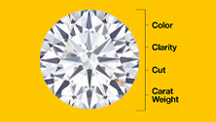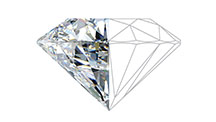

Modeling the Appearance of the Round Brilliant Cut Diamond: An Analysis of Brilliance
A mathematical model which can analyze how appearance factors depend on proportions.
Cultured Abalone Blister Pearls from New Zealand
The successful culturing of abalone pearls has been known since French scientist Louis Boutan’s experimentation in the late 1890s, but commercial production has been achieved only in recent decades.
Raman Investigations on Two Historical Objects from Basel Cathedral: The Reliquary Cross and Dorothy Monstrance
Two ecclesiastical objects of the late Gothic period (1350–1520) were investigated to identify the gemstones that adorn them.
Natural and Synthetic Rubies on the Basis of Trace-Element Chemistry
Natural and synthetic gem rubies can be separated on the basis of their trace-element chemistry.
The Rise to Prominence of the Modern Diamond Cutting Industry in India
This article reviews the rise of the modern diamond cutting industry in India and its impact on the world diamond trade.
Characterization of Chinese Hydrothermal Synthetic Emerald
Synthetic emeralds grown hydrothermally in an alkali-free, chlorine-bearing solution have been manufactured in Guilin, China, since 1987.
A Contribution to Understanding the Effect of Blue Fluorescence on the Appearance of Diamonds
Some gem diamonds fluoresce, most commonly blue, to the concentrated long-wave ultraviolet radiation of a UV lamp.
Benitoite from the New Idria District, San Benito County, California
Commercial quantities of gem-quality benitoite are known from a single location in the world, the Benitoite Gem mine in the New Idria district of San Benito County, California.
Synthetic or Imitation? An Investigation of the Products of Kyocera Corporation That Show Play-Of-Color
An investigation of the difference between synthetic opal and opal simulant.
Gem Rhodochrosite from the Sweet Home Mine, Colorado
New mining techniques have combined state-of-the-art equipment and technology to detect and extract large, fine-quality rhodochrosite specimens and gem rough.
Gemological Properties of Near-Colorless Synthetic Diamonds
Examination of 51 colorless to near-colorless synthetic diamonds from all known sources of production confirms that they can be distinguished from similar-appearing natural diamonds on the basis of their gemological properties.
Trapiche Rubies
Ruby crystals from Southeast Asia with a fixed six-rayed star, similar in effect to trapiche emeralds from Colombia, are described.
ブラジル、ミナスジェライス州のカパオ鉱山から採れる極上トパーズに関する最新情報 (英語)
The Capão mine is one of the oldest and most productive fully mechanized Imperial topaz mines in the historic Ouro Preto area of Minas Gerais, Brazil.
Some Gemological Challenges in Identifying Black Opaque Gem Materials
Among the most difficult gems to identify are those that are black and opaque (or nearly so).
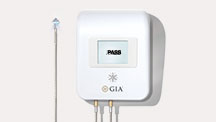
De Beers Natural versus Synthetic Diamond Verification Instruments
Two instruments have been developed at De Beers DTC Research Centre, Maidenhead, to distinguish synthetic diamonds from natural diamonds.
エチオピア、シェワ地方産オパール (英語)
Opal occurs as nodules in volcanic rocks at a new gem opal locality in the Menz Gishe district of Shewa Province, Ethiopia.
Russian Demantoid, Czar of the Garnet Family
Demantoid, green andradite garnet, was discovered in the Central Ural Mountains of Russia in the mid-19th century.
マダガスカル、Andranondambo地域産サファイア (英語)
Since 1993, large amounts of gem-quality sapphires from the Andranondambo region of southern Madagascar have entered the international gem market.
Summer 1996 Gem News International
A compilation of gem news from around the world, covering topics such as localities, unusual gem materials, market news, new products, discoveries, jewelry manufacturing techniques, and industry trends.
Growth Method and Growth-Related Properties of a New Type of Russian Hydrothermal Synthetic Emerald
A new type of Russian hydrothermal synthetic emerald is produced by seeded growth in steel autoclaves without noble-metal inserts; the seed slices have been cut parallel to a face of the second-order hexagonal dipyramid s (1121).
.jpg "YMAL GIA Ed")