
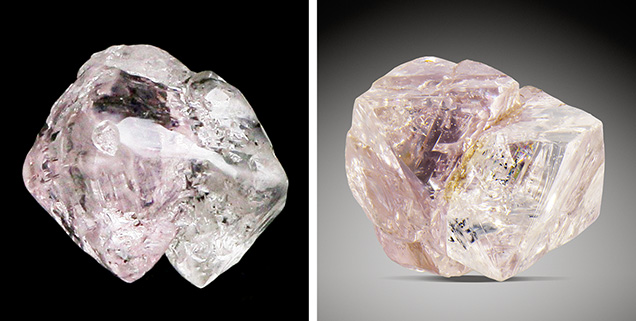
Bicolor Rough Diamond Crystals
Two Australian rough diamonds demonstrate both pink and colorless sections in the same crystal.
Internal Structures of Natural Pearls from Pinctada maxima, Identification of Resin-Filled Turquoise, Spinel Inclusions Chart, and More……
An overview of the Spring 2021 Gems & Gemology content.
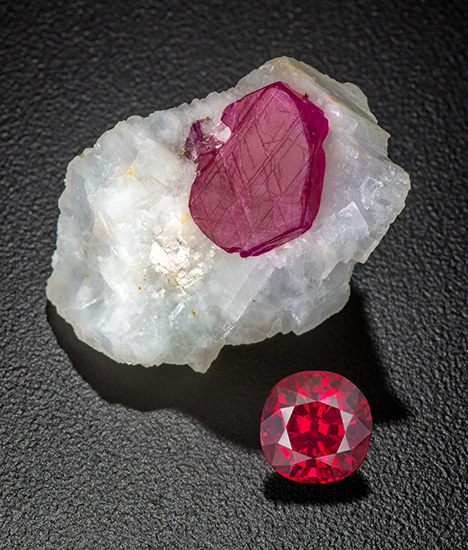
How to Calculate Color from Spectra of Uniaxial Gemstones
Presents a method for accurately predicting the color of a gem material when viewed in any direction as long as the polarized spectra and the viewing angle relative to the c-axis are known.
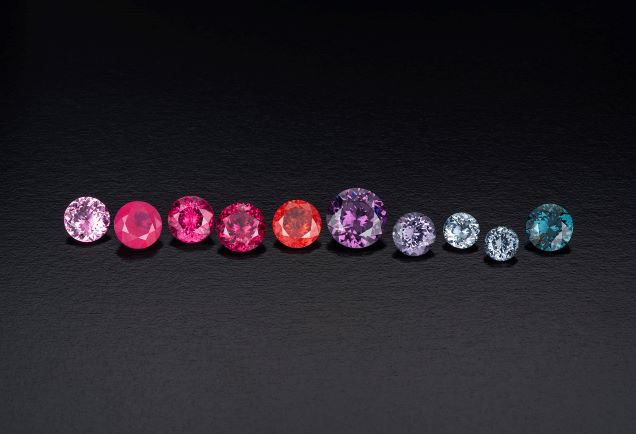
Micro-Features of Spinel
Provides a visual guide to the internal features of natural, synthetic, and treated spinel, as well as inclusions of spinel in other gemstones.
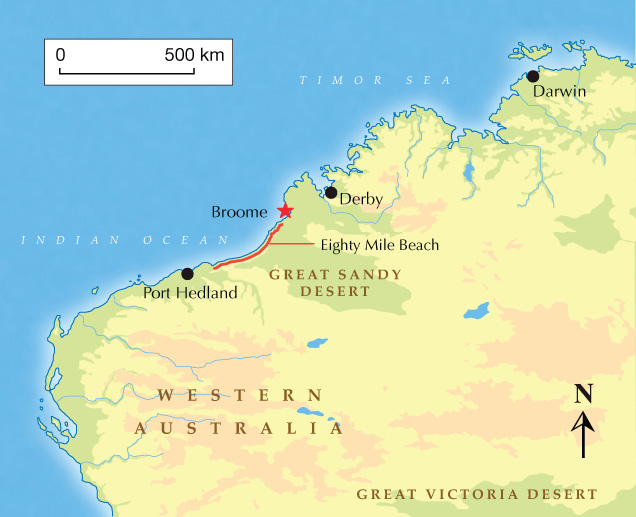
Internal Structures of Known Pinctada maxima Pearls: Natural Pearls from Wild Marine Mollusks
Presents the internal characteristics of natural P. maxima pearls, obtained from real-time microradiography (RTX) and X-ray computed microtomography (µ-CT) analysis of 774 samples.
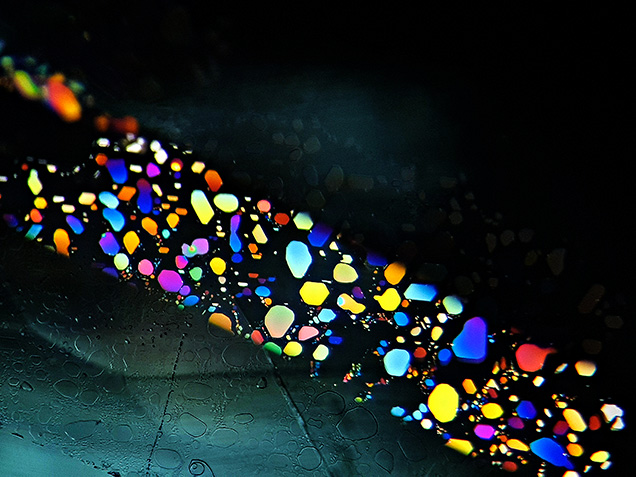
Thin-Film Fluid Inclusions in Aquamarine
Oblique fiber-optic illumination of thin-film fluid inclusions in Brazilian aquamarine reveals a kaleidoscopic play of interference colors.
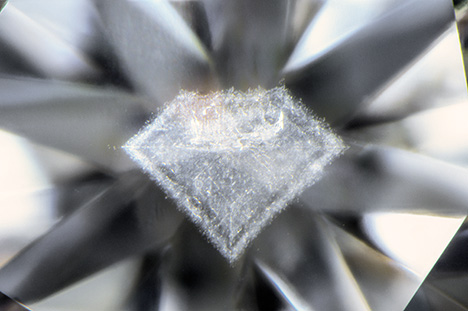
Diamond-Shaped Cloud in Diamond
In a delightful juxtaposition, a diamond-shaped cloud inclusion appears in the center of a 0.53 ct round brilliant diamond.
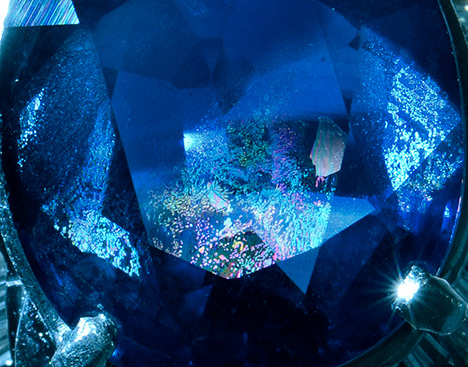
Remarkably Large Iridescent Healed Fissures Resembling Play-of-Color in Sapphire
Attractive iridescence creates a beautiful “play-of-color” effect on dendritic healed fissures in a blue sapphire.
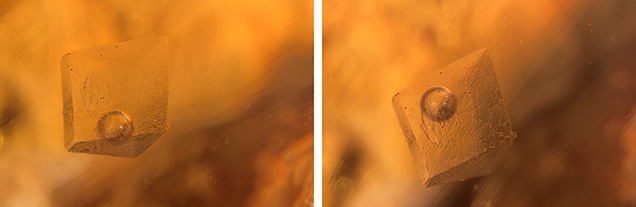
Opal with Fluid Inclusion and Mobile Bubble
The Carlsbad laboratory recently examined a Mexican opal containing a rare fluid inclusion with a freely moving gas bubble.
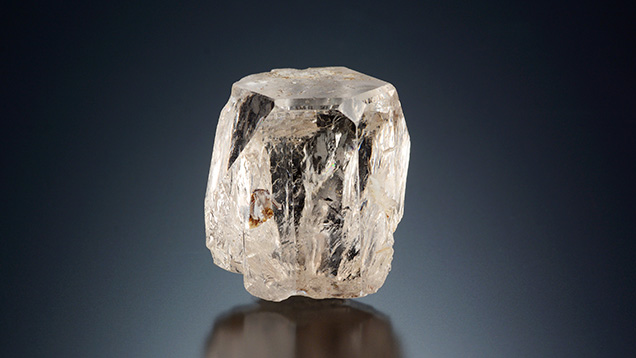
Quarterly Crystal: Topaz with Phlogopite
A singly-terminated topaz from Pakistan hosts a prominent phlogopite crystal with strong dichroism and lamellar cleavage planes.
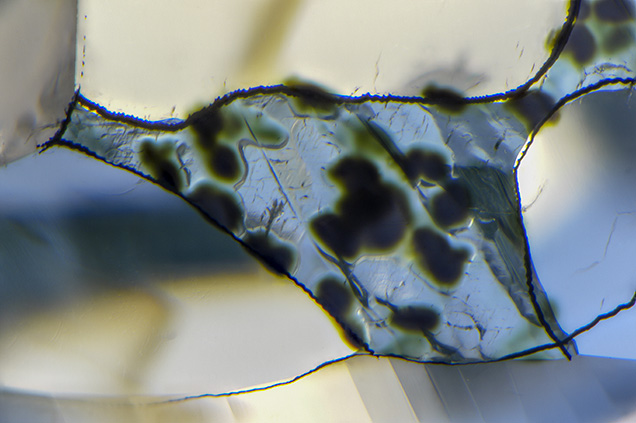
Expanded Diamond Surface Due to Radiation Staining
The author examined a 0.56 ct Fancy grayish bluish green diamond with prominent green radiation stains.
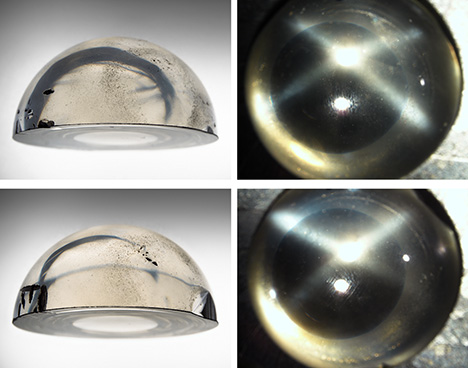
Asterism in Natural Diamond Cabochons
Two cabochons displaying white four-rayed “stars” are fashioned from one large natural diamond crystal.
GIA Laboratory Prevents Attempted Fraud
CARLSBAD, Calif. – May 17, 2021 – GIA is seeing an increase in the number of laboratory-grown diamonds submitted for update or verification services with counterfeit inscriptions referencing GIA natural diamond reports.

Winners Announced for The Beyoncé Knowles-Carter x Lorraine Schwartz GIA Scholarship
CARLSBAD, Calif. – April 20, 2021 – Inspiration is a driving force in all of our lives, and it was the deciding factor in the difficult decision to select just two recipients for the Beyoncé Knowles-Carter x Lorraine Schwartz GIA Scholarship for full tuition to earn GIA’s Graduate Gemologist diploma through distance education.
GIA Wins Trademark Infringement Suit
CARLSBAD, Calif. – April 14, 2021 – Citing recognition of GIA for gemological report services and education, a Belgian court unequivocally ordered AIG Belgium, operating as American International Gemological Laboratories and Antwerp International Gemological Laboratories, to immediately cease using ‘AIG’ alone or in conjunction with other marks, or face significant penalty payments.
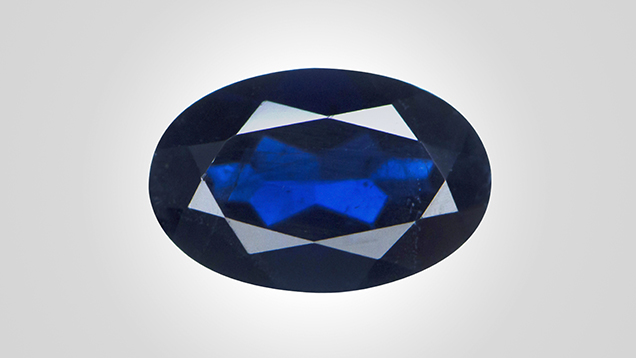
Unusual Absorption in a Blue Flux-Grown Synthetic Sapphire
The Bangkok lab identified unexpected characteristics in a flux-grown synthetic sapphire.
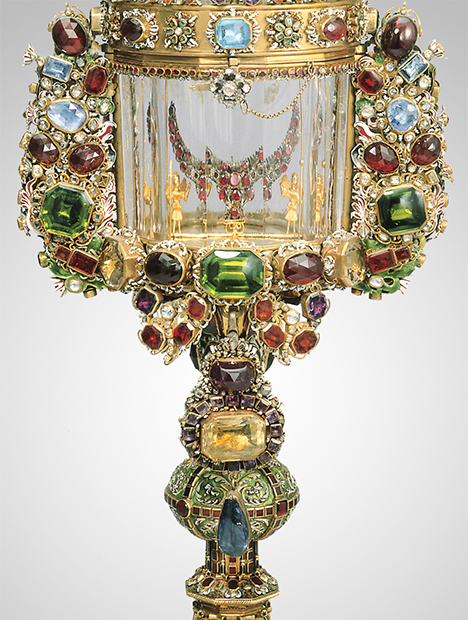
Baroque-Era Rose Cuts of Colored Stones: Highlights from the Second Half of the Seventeenth Century
Offers a systematic evaluation of rose cuts produced for various colored stones in the latter seventeenth century, based on the examination of rare artifacts that belonged to the archbishops and prince-electors of Trier and Cologne.
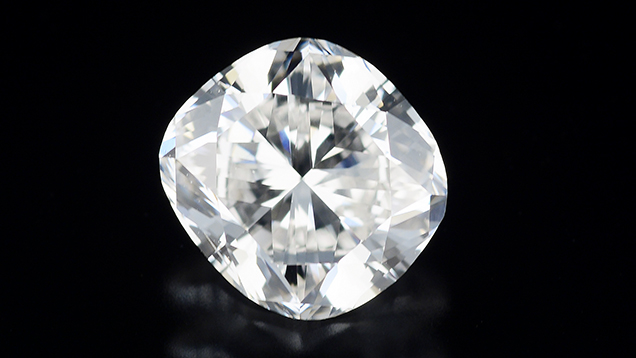
Large Type IIa Diamond from Arkansas, USA
The GIA lab in Carlsbad recently had the opportunity to examine a truly “all-American” diamond.
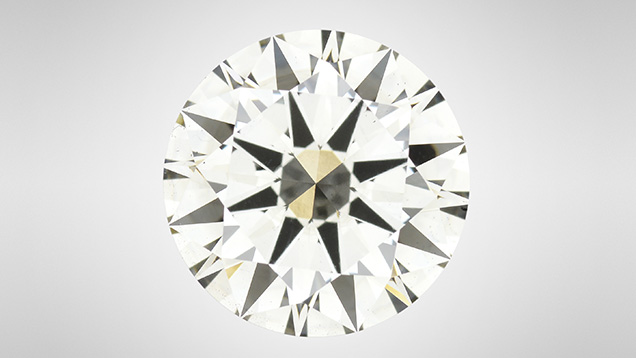
Largest CVD Laboratory-Grown Diamond Submitted to GIA
Progress in creating laboratory-grown CVD diamonds allows for larger sizes, including the largest yet seen at the Carlsbad lab.
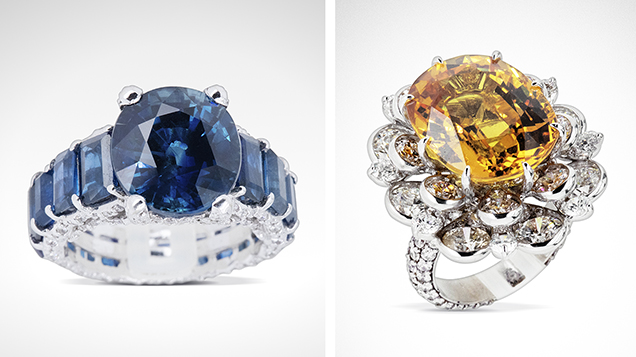
Mineral Inclusions in Sapphire from Basaltic Terranes in Southern Vietnam: Indicator of Formation Model
Proposes a formation model for sapphire from the main deposits in southern Vietnam based on the chemical composition of their mineral inclusions.
.jpg "YMAL GIA Ed")