
Ruby
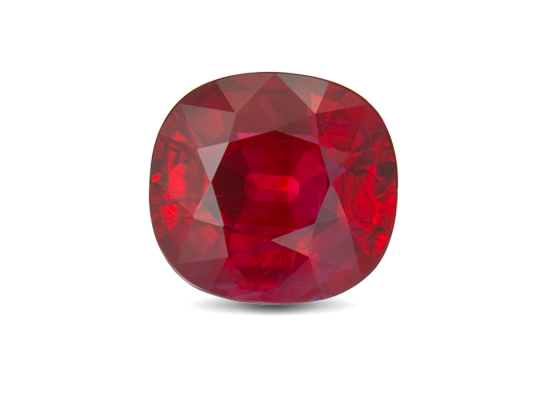
Ruby is the most valuable variety of the corundum mineral species, which also includes sapphire.
BUYER'S GUIDE
Ruby can command the highest prices of any colored gemstone. The per-carat prices of fine-quality rubies have been rising consistently, many times breaking auction records.
FIND A JEWELER
Use your zip code to find a jeweler near you with GIA reports and GIA-trained staff.
FIND A REPORT
Verify the information on your report matches what is archived in the GIA report database.
WHAT TO LOOK FOR
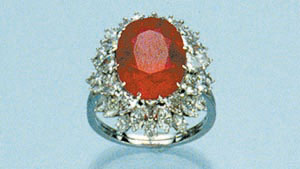
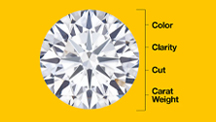
Color Is The Most Important Quality Factor For Ruby
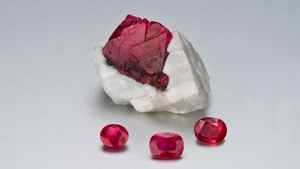
The finest ruby has a pure, vibrant red to slightly purplish red color. As the color becomes too orangy or more purplish, the ruby moves down in quality. The highest-quality rubies have vivid color saturation. The color must be neither too dark nor too light to be considered finest quality.
Clarity Refers To The Inclusions
People in the trade expect rubies to have at least some inclusions because inclusion-free rubies are rare. Ruby value depends on how visible the inclusions are. Obvious inclusions or inclusions that reduce transparency or brightness lower a ruby’s value dramatically.
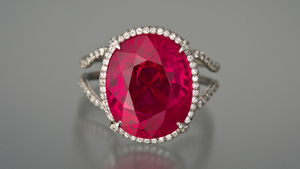
Cut Is One Of The Most Important Factors In Appearance
Several factors affect the cut and proportion of rubies on the market. A ruby’s crystal shape dictates its suitability for certain cuts. The most common shape is a flat tabular hexagonal shape, but ruby crystals from some sources can be elongated.
Carat Weight Allows For Precise Measurements
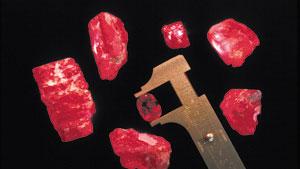
Fine-quality rubies over one carat are very rare, but commercial-quality rubies are commonly available in a wide range of sizes. The price per carat goes up significantly for ruby as it increases in size.
RUBY QUALITY FACTORS: THE COMPREHENSIVE GUIDE
TIPS & ADVICE
1. Work with a jeweler you trust.
Judging the quality of ruby requires expertise. Look for gemological credentials. A jeweler who knows and loves ruby will have several to show you so you can see quality differences side by side.
2. Don't confuse origin with quality.
Even the best mines produce low-quality material. Where a ruby comes from is no guarantee of value or quality. Fine-quality rubies can come today from several countries.
3. Ask about treatment.
Most ruby has been heated, and some gems on the market also have had color diffused into the surface or fractures filled with lead glass to improve their appearance. When shopping, ask about treatment information included in writing.
4. When in doubt, get a lab report.
A report from an independent laboratory like GIA can confirm that the ruby you are buying is natural and tell you whether there is evidence of treatment.
QUESTIONS & ANSWERS
- Q
DOES GIA GRADE RUBY?
AGIA evaluates ruby but does not grade it. A GIA Colored Stone Identification & Origin Report assesses the characteristics of a ruby (weight, measurements, shape, cutting style and color), indicates whether it is natural or laboratory-grown and names any detectable treatments, and can issue an opinion on geographic origin when possible and requested by the client.
- Q
IS A BURMA RUBY WORTH MORE?
AEvery mine produces a wide range of quality. The fact that a ruby comes from a famous mine doesn’t mean it is good quality. But fine-quality rubies that have documentation of Myanmar (Burmese) origin from an independent laboratory like GIA command a premium in the market.
- Q
DOES HEAT TREATMENT AFFECT THE VALUE OF RUBY?
AYou should assume your ruby is heated. Rubies that have a report from an independent laboratory like GIA confirming there is no evidence of heat command a premium due to their rarity. Rubies that have been diffused or are glass filled are worth less than heated rubies.
- Q
WHAT’S A “CREATED” RUBY?
ALaboratory-grown rubies are generally marketed with the name of the company and the word “created” rather than “synthetic.” The Federal Trade Commission Jewelry Guides permit the terms “laboratory-grown,” “laboratory-created” or “[manufacturer name]-created” to describe man-made materials.
- Q
WHAT IS THE BLOCK BURMESE JADE ACT OF 2008?
AThe Tom Lantos Block Burmese JADE (Junta's Anti-Democratic Efforts) Act of 2008 prohibited United States imports of jadeite and ruby from Myanmar (formerly Burma), even if the gems were processed in, and exported from, another country. The ban was lifted in 2016.
CARING FOR YOUR RUBY
Keep your ruby beautiful by following simple care and cleaning guidelines.
DURABILITY