

◂ BACK TO GEM ENCYCLOPEDIA
Ruby
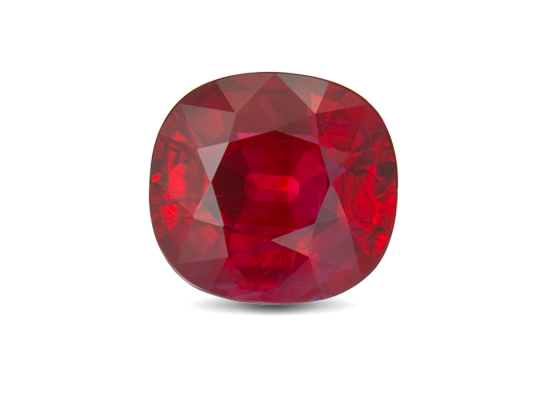
Ruby is the most valuable variety of the corundum mineral species, which also includes sapphire.
See Gem As
Tools
Research
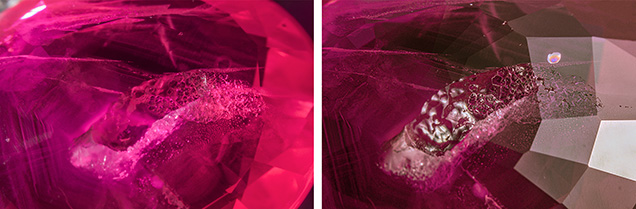
Ruby with Interesting Synthetic Overgrowth
Microscopic examination of a ruby at the Carlsbad laboratory reveals synthetic overgrowth indicative of high-temperature heat treatment.

“Electromagnetic Wave” Inclusion in Mong Hsu Ruby
Fiber-optic illumination reveals an electromagnetic wave-like pattern of particles in a ruby from Myanmar.
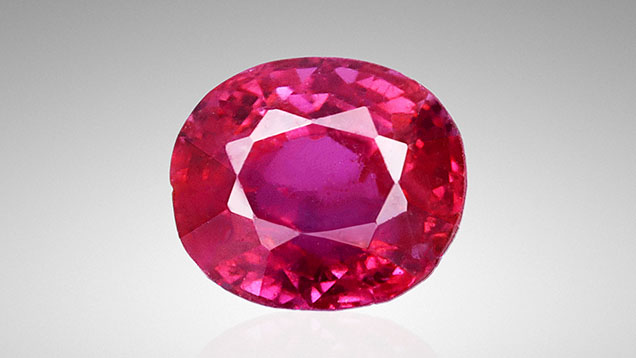
Extremely Rare Hellandite Inclusion Found in a Mogok Ruby
A rare inclusion is reported in ruby from the Mogok mine for the first time.
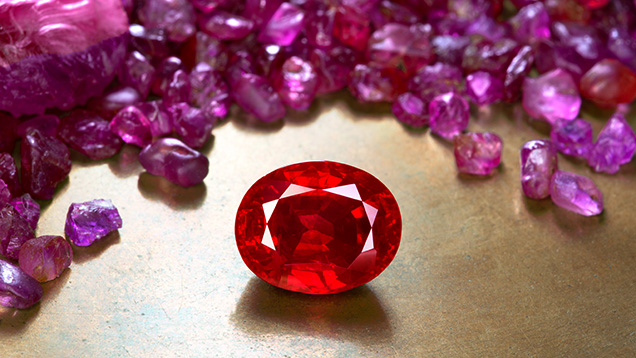
A Canary in the Ruby Mine: Low-Temperature Heat Treatment Experiments on Burmese Ruby
Documents heating experiments conducted on Burmese rubies to find useful indicators of heat treatment at temperatures below 1200°C.
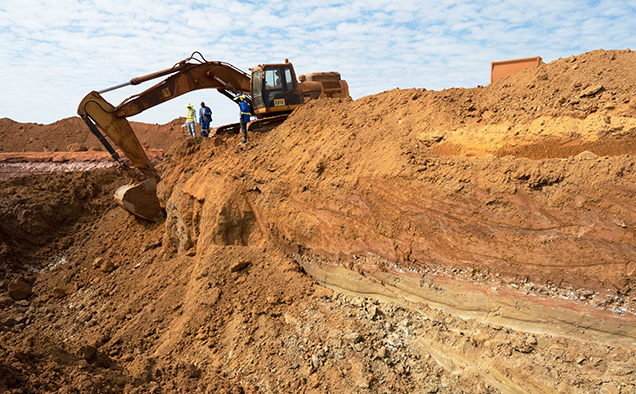
Update from Mozambique’s Ruby Mines
A field gemology team from GIA provides an update on the ruby mining operations around Montepuez.
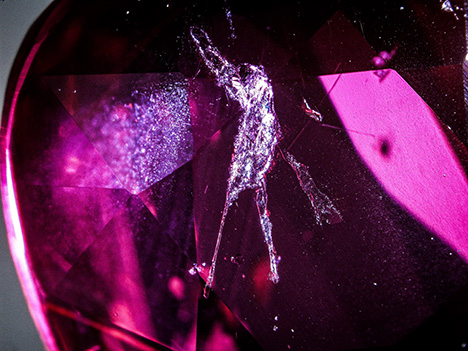
Extraterrestrial-Like Inclusion in Mozambique Ruby
Microscopic examination reveals an inclusion resembling an extraterrestrial in a ruby from Mozambique.
An evaluation of the potential for determination of the geographic origin of ruby and sapphire using an expanded trace element suite plus Sr-Pb isotope compositions.
Krebs M.Y., Hardman M.F., Pearson D.G., Luo Y., Fagan A.J., Sarkar C. (2020) An evaluation of the potential for determination of the geographic origin of ruby and sapphire using an expanded trace element suite plus Sr-Pb isotope compositions. Minerals, Vol. 10, No. 5, 37 pp.
Coexisting rubies and blue sapphires from major world deposits: A brief review of the mineralogical properties
Palke A.C. (2020) Coexisting rubies and blue sapphires from major world deposits: A brief review of the mineralogical properties. Minerals, Vol 10, No. 5, 20 pp.
Identification of opaque sulfide inclusions in rubies from Mogok, Myanmar and Montepuez, Mozambique.
Vertriest W., Palke A. (2020) Identification of opaque sulfide inclusions in rubies from Mogok, Myanmar and Montepuez, Mozambique. Minerals, Vol. 10, No. 6, 18 pp.
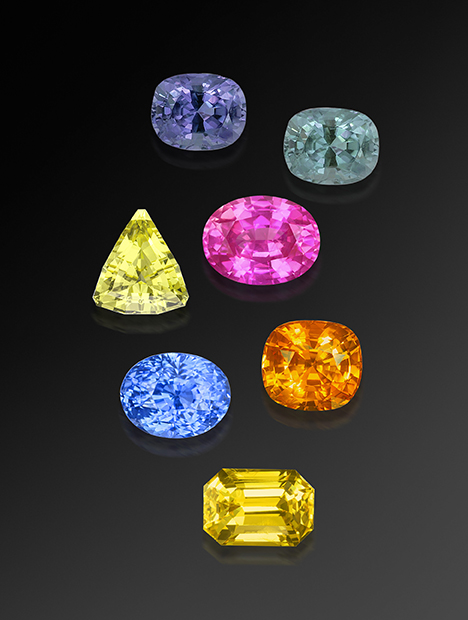
A Quantitative Description of the Causes of Color in Corundum
Presents a quantitative means of determining the causes of color in a gem material, using corundum’s six major chromophores as an illustration.
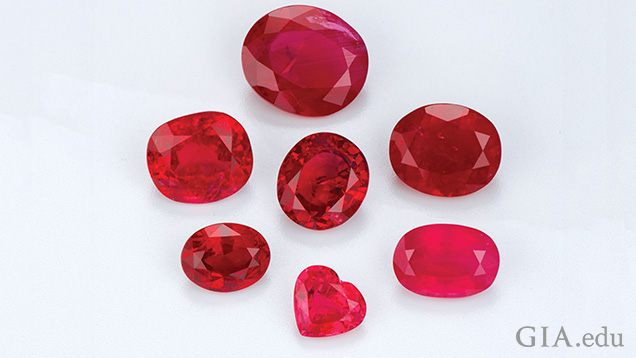
Not All That Glitters is Gold — Sometimes it is Mozambican Rubies
Learn about Mozambican rubies, including their mining history, characteristics and market demand.
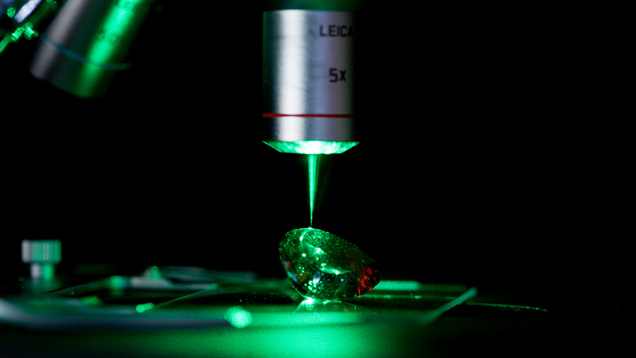
A Review of Analytical Methods Used in Geographic Origin Determination of Gemstones
Geographic origin determination relies on a combination of gemological observations and advanced analytical tools. This contribution reviews the analytical methods commonly used to establish origin.


